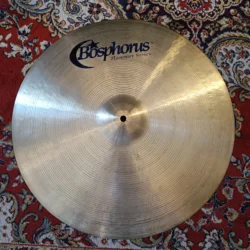
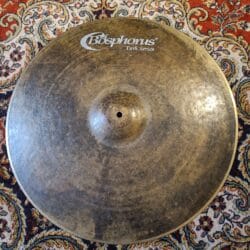
Bosphorus cymbals are renowned for being handcrafted in Istanbul, Turkey, using traditional Turkish cymbal-making techniques passed down through generations.
Here is a summary of their key characteristics:
Craftsmanship & Heritage:
- 100% Hand-Hammered: Each cymbal is individually forged and shaped by master cymbal smiths, often resulting from « thousands of expertly achieved hammer blows. » This process ensures that every cymbal is unique with its own distinct aural complexity.
- B20 Bronze Alloy: They are made from the classic B20 alloy (80% copper and 20% tin), considered the most musical of all bronze alloys.
- Traditional Process: The manufacturing follows centuries-old methods, including melting the alloy in wood-coal fired pits and repeated heating, rolling, and annealing (quenching in water) to achieve the metal’s durability, flexibility, and musicality.
Sound Characteristics:
- Bosphorus cymbals are generally known for their complex, dark, and warm tones, reflecting the traditional Turkish sound.
- The sound profile is diverse across their series, ranging from:
- Dark, delicate, and complex (e.g., Master Vintage, Turk)
- Bright, sharp, and penetrating (e.g., Gold Series)
- They are highly prized by the jazz drumming community for their articulation, musical tonal depth, and suitability for lower-volume playing, but the diverse range means they are used across many genres, including rock and pop.
Popular Series Examples:
- Traditional Series: The most diverse line, offering classic Turkish sounds from dark to bright.
- Turk Series: Characterized by a dark, dry, and raw sound due to its completely unlathed finish and reduced overtones.
- Master & Master Vintage Series: Focus on a dark, warm, low-pitched sound with a precise stick ping, often favored for traditional jazz.
- Gold Series: Designed for a bright, crisp, and clean sound with a shorter decay, making them suitable for louder music styles.